Friction as a Filter: The Journals Asking Scientists to Pick Up a Pen Again
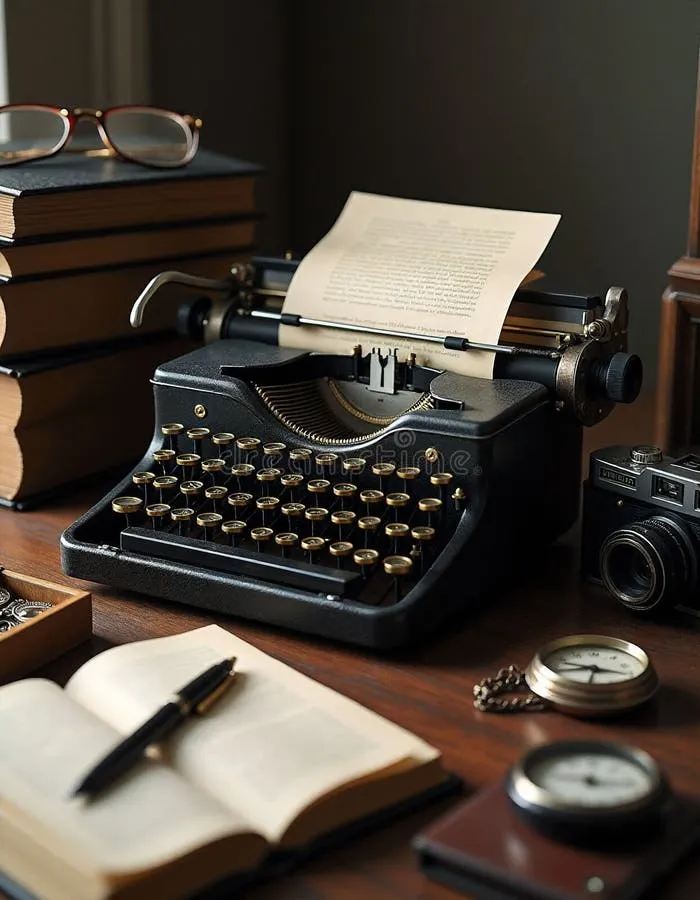
Photo: vintage typewriter manuscript scientific journal desk, via thumbs.dreamstime.com
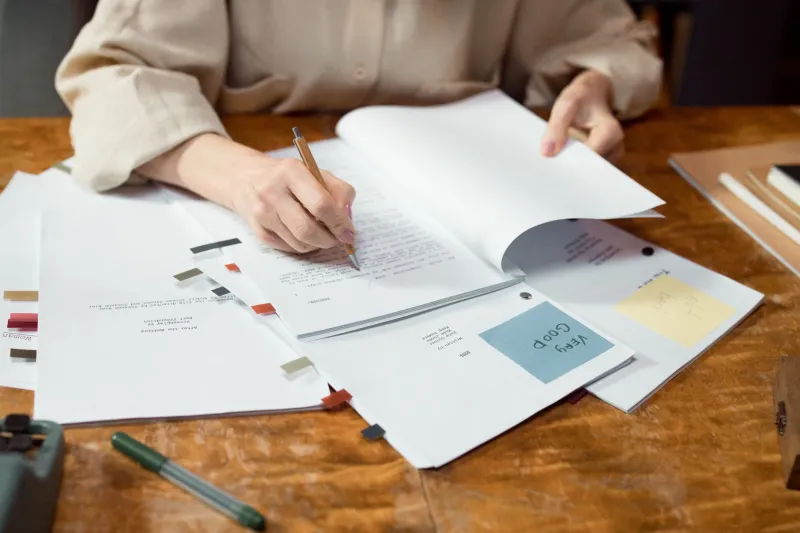
The manuscript arrived at the editorial office of a small Midwestern methods journal on a Tuesday, printed on a dot-matrix printer, its figures drafted by hand on graph paper, its margins dense with the kind of annotations that word processors quietly deleted years ago. The editor-in-chief, who asked that the journal remain unnamed while its experiment continues, read it twice before sending it out for review. "I caught three errors in the first read," she says. "Under normal conditions, I catch none."
She is not alone. Across a scattering of journals — most of them small, independent, and methodologically focused — a deliberate counter-current is forming against the frictionless submission pipeline. These publications are asking authors to slow down, sometimes literally, by requiring analog or semi-analog preparation of manuscripts: typewritten drafts, hand-rendered figures, manually compiled reference lists. The wager is counterintuitive. If peer review is straining under volume, and if error rates in published literature remain stubbornly high, perhaps the problem is not that review is too slow. Perhaps it is that everything before review has become too fast.
The Case for Deliberate Inconvenience
The logic behind what some editors are calling "friction-based review" borrows from a well-established finding in cognitive science: effortful production improves error detection. Studies of transcription and proofreading have long shown that people catch more mistakes when working with material they have labored over. A researcher who has drafted a figure by hand — measuring axes, plotting points one at a time — develops an intimacy with the data that a matplotlib default output cannot replicate.
"When you typeset your own table, you notice the row that doesn't sum," says one editor of a psychometrics journal that began piloting analog submissions in 2023. "When the software does it for you, the inconsistency is invisible until a reviewer finds it, if anyone ever does."
The early returns, though anecdotal, are striking. Several of the journals experimenting with analog formats report submission declines of 30 to 60 percent — which, in a field drowning in quantity, editors describe as a feature rather than a bug. More notably, they report changes in the character of what does arrive. Manuscripts are shorter. Claims are more hedged. Figures, stripped of the ornamental defaults of modern plotting libraries, are returning to a kind of austere legibility that some veteran reviewers compare to the golden age of journal typesetting.
What Authors Say When You Ask Them to Slow Down
Not everyone is persuaded. A computational biologist at a large East Coast university, who submitted to one of the pilot journals last year, describes the experience as "archaeology cosplay." His critique is practical: analog requirements impose asymmetric burdens on researchers juggling teaching loads, grant deadlines, and caregiving responsibilities. "I can regenerate a figure in ninety seconds," he says. "Hand-drafting it took an afternoon. Multiply that across a career and you've built a new form of gatekeeping — one that selects for people with spare afternoons."
That concern echoes a broader tension in contemporary science policy: reforms intended to improve quality often redistribute burden unevenly. Early-career researchers, scholars at teaching-heavy institutions, and those without laboratory support staff may find deliberate friction harder to absorb than their well-resourced peers. The editors running these experiments acknowledge the problem, and several have adopted accommodations — allowing digital figures upon request, for instance, or extending deadlines for authors without institutional support.
But some authors, unexpectedly, have become converts. A sociologist who grudgingly typed her last manuscript on a manual typewriter describes the experience as "the most careful I have ever been with my own argument." Without the ability to copy, paste, and restructure at speed, she says, she was forced to think through each paragraph before committing it to the page. "The typewriter doesn't let you hide. Every sentence has to be decided in advance. That's a discipline peer review can't teach."
Is Friction Scalable — or Is That the Point?
Skeptics within the methodology community raise a sharper objection: whatever analog submission accomplishes, it cannot scale, and solutions that cannot scale may simply relocate problems rather than solve them. If a journal reduces its submission load by half through friction, the unanswered manuscripts have not disappeared — they have been redirected to faster venues, where the errors the analog process would have caught will instead be caught by no one.
Defenders of the experiment offer two responses. First, they argue that the goal is not to convert the entire publishing ecosystem but to establish a proof of concept: that attention, not throughput, is the binding constraint on scientific quality. If the demonstration influences how larger journals design their workflows — say, by introducing mandatory author-led error audits or delayed submission windows — the analog journals will have done their work. Second, they note that friction has a signaling function. A journal that demands an afternoon of manual labor is telling authors, in the most concrete way possible, that it will match that labor with its own attention.
There is also a quieter, almost archival argument. Hand-drawn figures and typed pages carry a material record of the scientific process — the crossed-out axes, the recalculated scale, the margin note questioning an outlier. In an era when version history lives on remote servers and drafts evaporate into collaborative documents, analog manuscripts preserve the texture of how a result came to be believed. For a discipline increasingly worried about its own reproducibility, that record may be worth more than efficiency.
An Unfinished Experiment
No one involved in these pilots claims to have settled the question. The samples are small, the follow-up periods short, and the confounds plentiful — journals that adopt analog requirements are also, by nature, journals run by editors unusually invested in review quality. Whether the improvements observed so far stem from the format itself or from the selection effects it produces remains an open empirical question, and fittingly, one that several of the participating journals have pre-registered protocols to investigate.
What the experiment demonstrates already, though, is that the tools of scientific reform need not be technological. Sometimes the intervention is subtraction. In asking researchers to pick up a pen, these journals are testing a proposition as old as the craft of scholarship itself: that care is not a cost to be engineered away, but the method underneath all the others.